Selling Software to Operators Who Have 90 Seconds Between Slack Notifications
If you sell software to operators -- e-commerce platforms, ops tools, inventory management, customer support, fulfillment, returns, subscription management, restaurant tech, SMB accounting -- you're selling to the most time-constrained buyer in B2B SaaS.
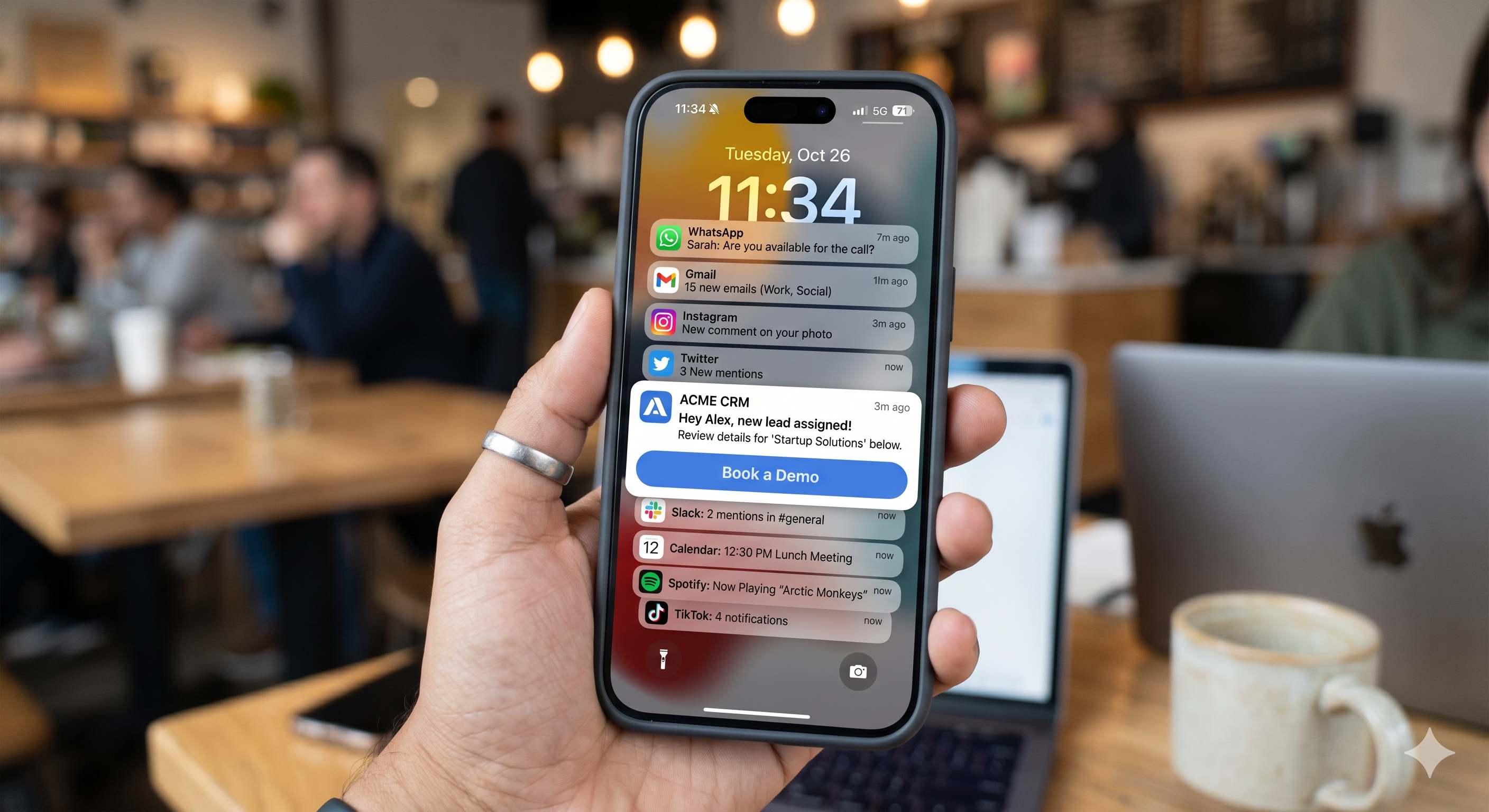
The operator running a Shopify store or a 50-person logistics company doesn't have 30 minutes to research your product. They have 90 seconds between a Slack notification, a customer support ticket, a shipping delay, and the next fire. If your homepage can't communicate value in that 90-second window, they bounce -- not because your product is wrong, but because they ran out of attention.
This is the 95% problem in operator-focused SaaS. The qualified buyer is on your site, has budget, has real pain, and is actively shopping. They leave because nothing on your homepage helped them decide in the 90 seconds they could spare. They'll get pulled into another fire and won't come back tomorrow.
The four people visiting your operator-focused homepage
Operator SaaS sells across a buying committee that's smaller than enterprise but more time-pressed:
The owner-operator / founder. Running a sub-$50M business. Often the entire executive team. Cares about whether your tool reduces their personal workload or just adds another dashboard to check. Has been pitched ten tools this month and has time for none of them. The decision-maker, the user, and the budget owner all in one person.
The Head of Operations / COO. Operational buyer at a 50-500 person company. Owns the day-to-day. Cares about integration with their existing stack (Shopify, NetSuite, ShipStation, Zendesk, the dozen tools they're already paying for), and whether your tool reduces or increases the operational surface area. Pragmatist.
The team lead / department head. Owns the function (fulfillment, support, returns, finance). Will use your tool daily. Cares about workflow speed, team adoption, and whether the tool actually solves the problem or just shifts it. The skeptic at the demo.
The IT generalist or external consultant. At smaller operators, there's no IT department -- it's a part-time consultant or a tech-savvy ops manager. Cares about implementation effort, data migration, training time, and whether your tool will require ongoing maintenance they don't have bandwidth for.
These four buyers visit the same homepage. The owner-operator wants the headline outcome (more sales, fewer returns, lower cost). The COO wants the integration matrix. The team lead wants the demo video. The IT generalist wants the implementation timeline. Most operator SaaS sites try to serve all of them with the same hero section -- and serve none of them well.
Why this matters more in 2026
The operator software market is in a structural shift. Two things are happening simultaneously.
First, the post-COVID SaaS bloat is being undone. Operators are auditing their stacks. The era of "buy a tool for every problem" is over. Every new purchase has to justify replacing something. The buyer on your homepage isn't in a "add to stack" mood -- they're in a "what does this replace" mood.
Second, AI has reshaped what operators expect from software. They've seen ChatGPT. They've used Claude. They know what fast, helpful software feels like. When they land on your homepage and have to dig through three layers of marketing copy to find the actual product, the contrast is jarring. They're not patient. They're not curious. They're moving on.
On the outbound side: operators are functionally unreachable via cold outreach. Their email is for customers. Their LinkedIn is for hiring. Cold sequences from SaaS vendors get deleted instantly. The buyer who chooses to visit your site is, for many operator SaaS companies, the only meaningful inbound channel -- which makes converting them more important than ever.
Why the usual fixes don't fix this
The standard operator SaaS playbook:
"We added a free trial." Right move for operators. But if the buyer can't tell from your homepage whether the tool fits their business in the first 60 seconds, they never get to the free trial.
"We made the demo shorter." Helps the few who book demos. Doesn't help the 95% who never book one because they couldn't get enough signal from your homepage to invest the time.
"We added an AI chatbot." Operators have used AI chatbots. They know what they are. A generic "How can I help?" widget reads as another marketing layer to bypass, not as actual help.
"We hired more inside sales reps to chase visitors." Snitcher or 6sense identifies the company, your SDR runs an outbound sequence the next day. The operator who visited yesterday is, today, dealing with a shipping delay, a customer escalation, and three Slack DMs. Your email doesn't get opened.
The deeper issue: operators don't research the way enterprise buyers do. They don't book three discovery calls in a quarter. They scan, decide, and either trial or move on. The window is short and you only get one shot.
What needs to happen instead
The unlock for operator SaaS is recognizing that you have a 60-90 second window to get the right buyer the right answer. Personalization isn't a long-game strategy here -- it's the difference between conversion and a closed tab.
When a visitor lands on your operator-focused site, three things should happen inside the first second:
- The system identifies their company. Snitcher and 6sense do this in real time using IP intelligence -- now affordable for any company, not just enterprise.
- It enriches the company record with firmographic data via Apollo, Clay, or similar: company size, industry sub-segment, geography, tech stack signals.
- It scores them against your ICP and watches behavior.
Then the experience adapts -- and fast.
An owner of a 30-person DTC brand on Shopify lands and immediately sees a panel: case study from a similar Shopify brand, the Shopify-specific integration documentation, a free trial CTA. Not "Book a Demo to Learn More."
A COO of a 200-person logistics company who clicked /integrations gets a deeper integration map for the logistics stack they're running -- ShipStation, ShipHero, EasyPost, the WMS they care about.
When the ICP score crosses the threshold and intent is high -- the owner of a 50-person operation, second visit, four minutes on pricing -- your Slack lights up. You're in the chat in one click.
For operators, who are accustomed to vendor sales motions that feel slow and corporate, the immediacy is disarming. It signals that you understand their pace -- which is often the entire purchase decision.

Yura Riphyak
Yura is building the future of intelligent GTM at Alphie. Previously, he co-founded YouTeam (YC W18, acquired by Toptal) and Hubbub.fm.
Stop Losing Operator Buyers to Notification Fatigue
See how Alphie helps operations-focused SaaS companies convert buyers who have 90 seconds of attention.