Why Selling Software to Designers Is Different (and Why Most Vendors Get It Wrong)
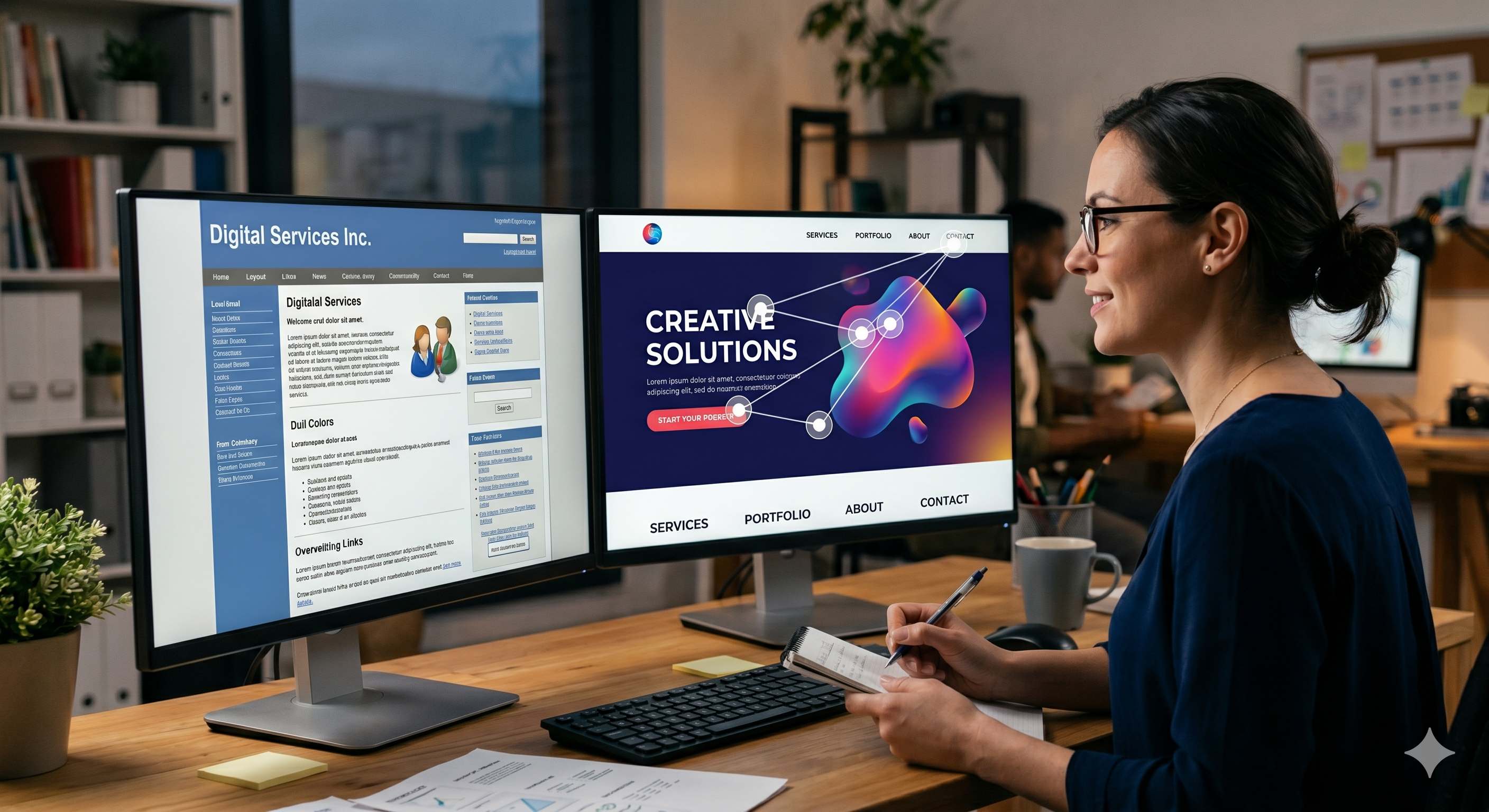
If you sell software to designers and creative teams -- design tools, prototyping platforms, design systems, asset management, AI design copilots, creative collaboration, brand management, video editing, presentation tools -- you're selling into the most aesthetically discerning buyer in B2B SaaS.
Designers don't read your homepage; they look at it. They notice the kerning. They notice whether your hero illustration is original or stock. They notice whether your screenshots have realistic content or "Lorem ipsum." They notice if your UI is on-trend or three years behind. By the time they've spent fifteen seconds on your site, they've made a judgment about your product based entirely on the quality of your design work.
This is the 95% problem in its most visceral form. The qualified buyer is on your site, they have real budget (design tools have substantial individual and team budgets), and they have real intent. But they bounce in the first ten seconds because your homepage signals -- in ways that aren't even conscious -- that you don't quite belong in their tool category.
The four people visiting your design tooling homepage
Design teams are heterogeneous in ways that aren't always visible to non-designers:
The Head of Design or VP of Design. Strategic buyer. Cares about whether your tool advances the design team's organizational influence, design system adoption, or cross-functional collaboration. Skims your homepage and immediately judges your design quality. If the homepage looks generic, the whole product feels suspect.
The senior designer or design lead. Operational buyer and champion. Cares about workflow fit, integration with their stack (Figma, Adobe, Linear, Notion), and whether your tool fits how their team already works. Will probably try the free tier within minutes.
The product designer or UX designer. Power user for many tools. Cares about UX, speed, file size, collaboration, and whether your tool gets out of their way. The skeptic at the demo.
The creative ops or design ops lead. Process buyer. Owns the day-to-day workflow infrastructure. Cares about asset management, version control, handoff to engineering, and whether your tool will reduce or increase the operational burden.
Same homepage. The VP wants the strategic narrative. The lead wants the workflow integration. The designer wants the UI demo. The ops lead wants the asset management page. Most design tooling sites pick one (usually the designer, who's the typical champion) and lose visibility into the rest.
Why this matters more in 2026
Design tooling is in the middle of a category-wide reset. Two simultaneous shifts are reshaping the buyer.
First, AI has hit design hard. Every category has new AI-native entrants. AI image generation, AI prototyping, AI design system maintenance, AI brand consistency. The buyer is seeing new launches weekly and pattern-matches aggressively. If your homepage uses "AI-powered" without showing actual output, you're filtered out.
Second, design budgets are consolidating. After years of "buy a tool for every design function," teams are auditing their stack. The buyer on your homepage isn't in "add to stack" mode -- they're in "what does this replace" mode. The narrative your homepage tells matters.
And on the outbound side: designers are functionally unreachable via cold outreach. They live in Figma, Notion, Slack, Discord -- not in their email. Cold sales emails to designers get archived instantly. The buyer who chooses to visit your site is, increasingly, the only inbound channel that works for design tools.
Why the usual fixes don't fix this
The standard design tooling playbook:
"We hired a great brand designer for the homepage." Necessary, not sufficient. A beautiful generic homepage still doesn't tell the visitor whether your tool fits their workflow, stack, or scale. Beautiful but generic is still generic.
"We added more product screenshots." Designers scan screenshots within seconds and judge them. Generic screenshots with stock photos and Lorem ipsum text actively work against you.
"We added customer logos from notable brands." Helpful for credibility. But designers also know which brands pay for placement. They scan for peer companies or teams whose work they respect.
"We added an AI chatbot." Designers, evaluating AI design tools, are the most aesthetically critical audience for a generic chatbot. A pop-up widget reads as a brand inconsistency, undermining the rest of your homepage's design quality.
"We hired more SDRs to chase identified visitors." Snitcher or 6sense identifies the company, your SDR runs a sequence the next day. Designers' email inboxes go untouched for days. Your email doesn't get opened.
The deeper issue: design buyers evaluate vendors partly on how the vendor presents itself, because the vendor's presentation reveals something about whether they understand design culture. A homepage that's slightly off-brand, slightly behind on type trends, slightly generic in illustration style signals that you don't quite get it -- and the buyer makes their decision on that signal, often unconsciously.
A Harvard Business Review study found firms that contacted potential customers within an hour of a query were nearly 7 times as likely to qualify the lead as those that waited even an hour later -- and more than 60 times as likely as companies that waited 24 hours or longer. For design tooling, where the buyer's evaluation cycle is short and the alternative is "I'll just keep using Figma," the speed-to-lead penalty is steep.
What needs to happen instead
The unlock for design tooling is recognizing that the buyer's evaluation is partly aesthetic, partly workflow-specific, and almost always parallel (they're evaluating against the tool they already use, which is usually Figma).
When a visitor lands on your design tooling site, three things should happen inside the first second:
- The system identifies their company. Snitcher and 6sense do this in real time using IP intelligence -- now affordable.
- It enriches the company record with firmographic data via Apollo, Clay, or similar: company size, design team size, tech stack signals.
- It scores them against your ICP and watches behavior.
Then the experience adapts.
A Head of Design at a 200-person Series C SaaS company gets a panel showing your case study from a similar-stage SaaS design org, with specific design ops outcomes -- adoption rate, design-to-dev handoff speed, design system adherence.
A senior designer who came from a Google search for "Figma alternative" or "[competitor] vs [you]" gets the migration story and a comparison addressing the specific friction of switching.
A product designer who clicked /pricing gets the free trial CTA and a video showing the actual product UI -- not the marketing version.
A design ops lead who's been on /integrations gets the deeper Figma, Linear, and Notion integration documentation.
When the ICP score crosses the threshold -- Head of Design at a target company, second visit, four minutes on case studies -- your Slack lights up. You're in the chat in one click. The AI says: "Hold on -- Yura, our founder, just joined the conversation."
For design buyers, this matters specifically because they recognize good vendor design and good vendor responsiveness as related signals. If both are present, the credibility transfer is strong. If either is missing, the deal is at risk.
The math for design tooling
Let's run it conservatively.
Say you're a Series B design tooling company getting 16,000 unique monthly visitors -- realistic with any kind of design-community content marketing. Say 2% currently convert to a free trial -- design tools tend to have higher trial conversion because designers are quick to try things. That's 320 conversions a month.
Industry data shows conversion lift ranging from 40 percent to 3.5 times when you layer real-time engagement, personalization, and smart follow-up. McKinsey research finds that companies excelling at personalization generate 40 percent more revenue than average players. Most vendors publishing these numbers run only one or two layers.
Even at the floor -- a 30% lift, which we target with our pilots -- that's another 96 conversions a month. Design tooling pricing varies widely, but team plans typically run $15-50 per user per month, with enterprise plans running $20K-$150K annually depending on team size. Ninety-six extra monthly conversions translate to material ARR growth, and in a category where Figma's network effect is hard to displace, conversion lift on the buyers who do visit is high-leverage.
A note on who we're built for
Design tooling is one of the categories where Alphie's math is genuinely interesting -- because the buyer is hyper-attuned to vendor presentation quality, and a personalization layer that matches the buyer's specific context reads as "this vendor gets it." That signal is rare and valuable in design.
Several of our pilot customers sell into design and creative teams. We were founded by a YC alum and we work with other YC design tooling companies. If you're building in this space, we understand the aesthetic-judgment dynamic, the Figma comparison gravity, and why a generic homepage costs you deals you'd never know about.
The demo takes fifteen minutes and shows Alphie running against your own site.

Yura Riphyak
Yura is building the future of intelligent GTM at Alphie. Previously, he co-founded YouTeam (YC W18, acquired by Toptal) and Hubbub.fm.
Stop Losing Design Buyers to Aesthetic Judgments
See how Alphie helps design tooling companies convert visitors who judge your product by your homepage.