Selling Sales Tech to Sales Leaders Who've Already Evaluated 30 Vendors This Year
If you sell software to sales teams — CRMs, sales engagement, outbound automation, AI SDRs, call intelligence, enablement, forecasting, RevOps tooling — you're selling into the most jaded buyer in B2B SaaS.
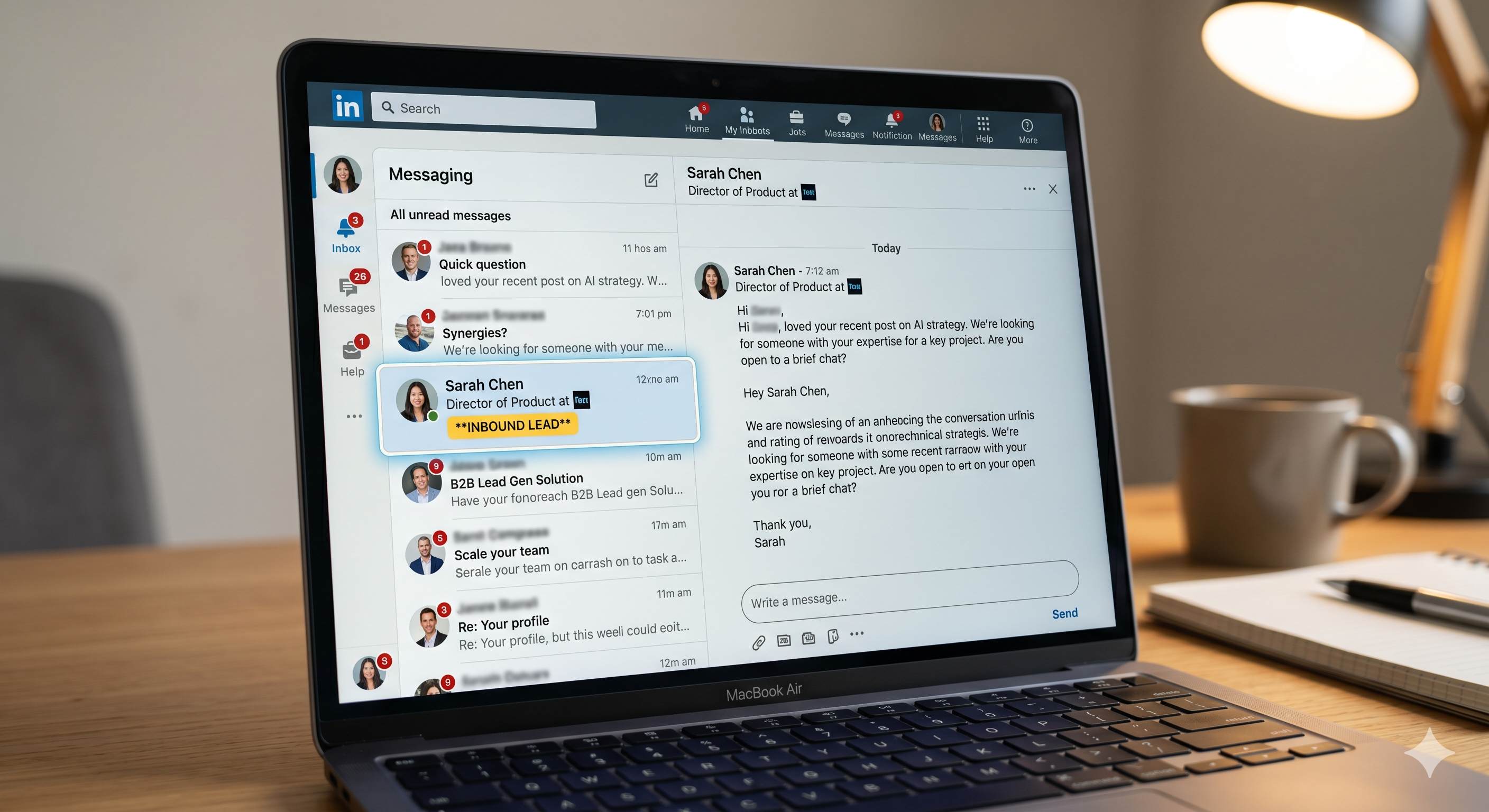
VPs of Sales and Heads of RevOps get pitched daily. Their LinkedIn DMs are a graveyard of cold sequences. Their inboxes are saturated with AI-generated outreach from companies running the exact same playbook you might be running. The buyer who lands on your site has, with near-certainty, evaluated five of your direct competitors in the last six months. They've sat through demos. They've seen the AI agent pitch. They've heard "we replace 3 SDRs" from a dozen vendors.
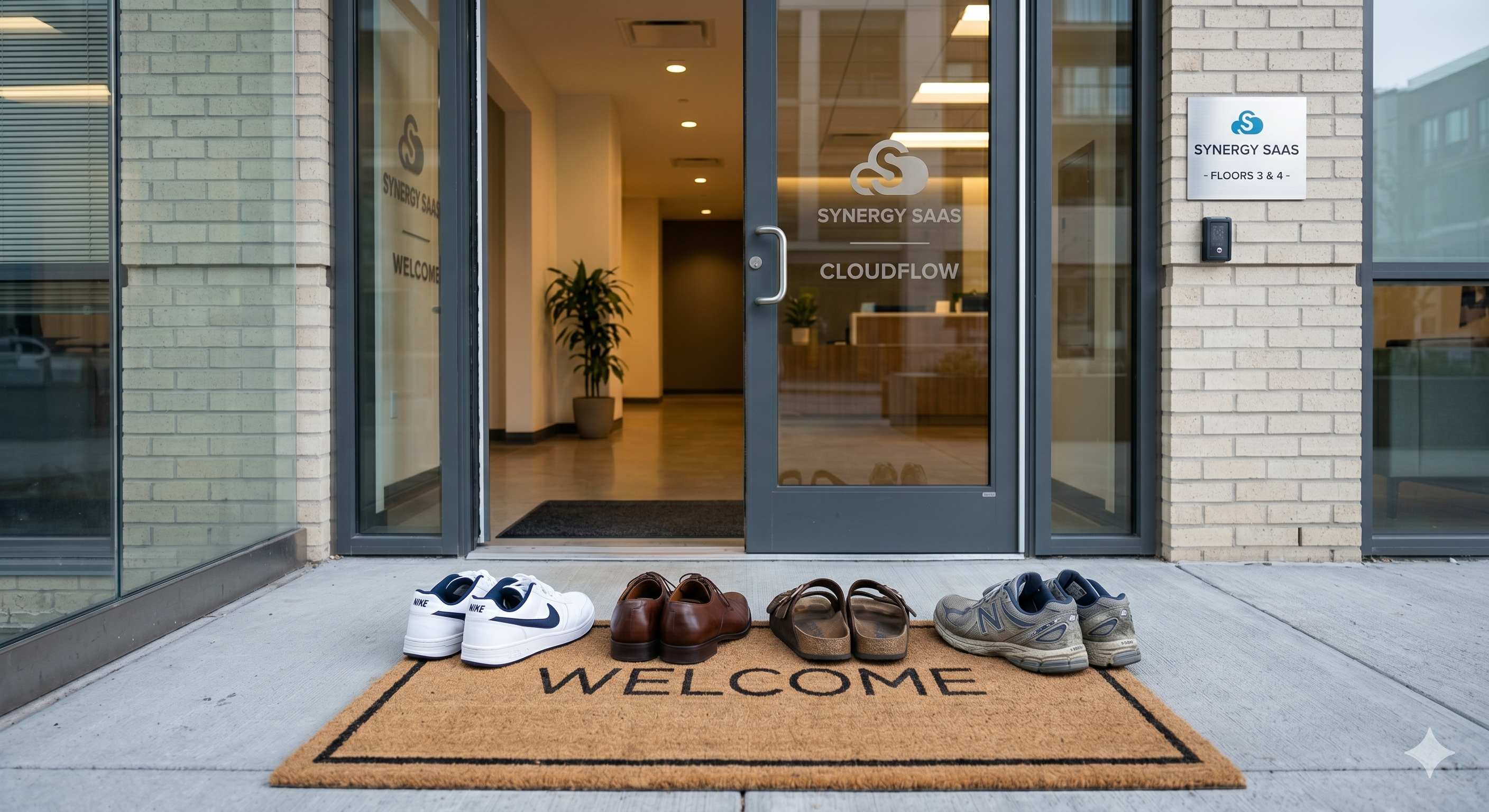
And then they land on your homepage. Which says... approximately what every other sales tech homepage says.
This is the 95% problem at its most acute. Sales tech has the highest noise floor and the most pattern-matching buyers in B2B SaaS. The conversion penalty for looking like everyone else isn't measured in lost demos. It's measured in the buyer closing the tab inside ten seconds.
The four people visiting your sales tech homepage
"Sales team" is shorthand for at least four very different buyers:
The VP of Sales. Pattern-matcher. Will recognize within fifteen seconds whether you're a real tool or another AI SDR wrapper. Cares about pipeline impact, ramp time, and whether your customers actually use the product after the contract starts. Skeptical by default. Has heard every pitch.
The Head of RevOps. Technical buyer for sales tech. Cares about CRM integrations (Salesforce, HubSpot, Pipedrive), data quality, reporting flexibility, and whether your tool plays nicely with the rest of the stack. Often the actual decision-driver on tooling, even when the VP signs the contract.
The Sales Manager. Pragmatist. Manages a team of 5-15 reps and is going to inherit your product's failure modes. Cares about adoption — will reps actually use it? — and whether implementation will eat a quarter of selling time. Has been burned before.
The individual SDR or AE. Power user. Will live in your tool daily if it survives the rollout. Cares about UX, speed, and whether the tool gets out of their way or adds friction to outreach. Their feedback in the pilot phase often kills deals after a strong VP pitch.
These four people visit your homepage. The VP wants strategic ROI claims with proof. The RevOps lead wants the integration matrix. The manager wants the case study from a comparable team. The rep wants a free trial and a thirty-second demo video. Same homepage. Same hero section. Same generic "Book a Demo" button.
Why this matters more in 2026
Sales tech is in the middle of its biggest reshuffle since Salesforce. The AI SDR wave — 11x, Regie, Artisan, dozens more — has changed buyer expectations. Forecasting tools are absorbing AI. Sales engagement is fragmenting. Every category has a new entrant claiming to replace the incumbent.
The buyer is exhausted. They've taken twenty calls this quarter. They've watched fifteen demos. Their evaluation criteria have gotten ruthless: if you don't differentiate in the first thirty seconds on your homepage, they assume you're undifferentiated and move on.
Meanwhile, the outbound channel that used to bring sales leaders into your funnel is collapsing. Sales leaders run their own outbound — they know what AI SDRs look like and they filter them out automatically. The cold email to a VP of Sales in 2026 is roughly as effective as it was in 1995, except now the VP can ask Claude to write a polite "no thanks." That makes inbound — the buyer who chose to visit your site — structurally more valuable than ever.
You can't afford to waste them.
Why the usual fixes don't fix this
The standard sales tech playbook:
"We added more case studies." Good, but you have eight on the page and the buyer reads zero. Case studies only convert when they match the visitor's company stage and motion. A 200-rep enterprise case study doesn't help a 10-rep Series A startup.
"We hired more SDRs to chase identified visitors." Snitcher or 6sense identifies the company, your SDR runs a sequence the next day. The VP of Sales who visited your site already has thirty unread messages from sales tech vendors. Yours doesn't get opened.
"We added an AI agent on the homepage." The buyer evaluating AI sales tools is the most hostile audience there is for a generic AI chatbot. If your widget says "Hi! What can I help with?" you've just demonstrated that your product is the same low-effort wrapper they were worried it might be.
"We tightened the demo flow." Helps when the buyer has decided to book a demo. Doesn't help with the 95% who never get there.
The deeper issue: sales leaders pattern-match aggressively. They've seen so many sales tech homepages that they've developed unconscious heuristics for filtering out the noise. If your site looks like the rest of the category, you're filtered out before they read a word.
A Harvard Business Review study found firms that contacted potential customers within an hour of a query were nearly 7 times as likely to qualify the lead as those that waited even an hour later — and more than 60 times as likely as companies that waited 24 hours. The penalty hits sales tech hardest of all, because sales leaders are themselves the buyers most attuned to fast follow-up. If your speed-to-lead doesn't match the standard you're selling them on, they'll notice — and they'll judge.
What needs to happen instead
The unlock is making your homepage adapt to the specific sales leader who landed on it. Not the generic VP. The actual VP, at the actual company, with the actual stack and team size you can infer in the first second.
When a visitor lands on your sales tech site, three things should happen inside the first second:
- The system identifies their company. Snitcher and 6sense do this in real time using IP intelligence — cheap and fast now.
- It enriches the company record with firmographic data via Apollo, Clay, or similar: company size, current CRM, sales team headcount, recent hiring signals.
- It scores them against your ICP and starts watching behavior.
Then the experience adapts.
A VP of Sales at a 60-person Series B SaaS company who lands on your homepage gets a panel highlighting your case study from a similar company — specifically, the one that scaled from 12 reps to 35 reps in eighteen months. Not the generic "we work with companies of all sizes" pitch.
A Head of RevOps from a Salesforce shop who clicked into your /integrations page gets a deeper integration map — showing exactly which Salesforce objects you sync, which native fields you write to, and a demo video of the Salesforce-specific workflow.
A sales manager from a customer using your competitor (which Apollo/Clay can often tell you) gets a comparison panel addressing the specific limitations of that competitor and a customer story from a team that migrated.
An individual rep who landed on /pricing from a Google search gets a free trial CTA instead of a "Book a Demo" button. The buying motion adapts to who the visitor is.
When the ICP score crosses the threshold — VP of Sales, 60-person Series B, second visit, four minutes on pricing — your Slack lights up. You're in the chat in one click. The AI announces it: "Hold on — Yura, our founder, just joined the conversation."
Sales leaders, of all people, recognize speed-to-lead when they see it. That moment of "our founder is here, now" is the most credible thing your website can possibly do.
The math for sales tech
Let's run it conservatively.
Say you're a Series A sales tech company getting 25,000 unique monthly visitors — realistic with any kind of content engine or paid spend. Say 1.8% currently convert to a free trial signup or demo request. That's 450 conversions a month.
Industry data shows conversion lift ranging from 40 percent to 3.5 times when you layer real-time engagement, personalization, and smart follow-up. McKinsey research finds that companies excelling at personalization generate 40 percent more revenue than average players. Most vendors publishing those numbers are only doing one or two of those things, not the full cycle.
Even at the floor — a 30% lift, which we target with our pilots — that's another 135 conversions a month on the same traffic. At sales tech ACVs (typically $15K-$50K for SMB, $50K-$200K for mid-market), that's $2-10M of additional ARR annually.
For a category where every Series A is fighting for the same buyer pool, that's a structural advantage.
A note on who we're built for
Sales tech is one of the categories where Alphie's math compounds fastest. The buyer pattern-matching problem is brutal here. The speed-to-lead penalty is double — not just for the lead, but for your credibility as a sales-tech vendor. And the multi-buyer problem (VP / RevOps / manager / rep) is sharper here than almost anywhere else.
Several of our pilot customers sell into sales teams. We were founded by a YC alum and we work with several other YC sales tech companies. If you're building in this space, we already know what your buyers look like — because we sell to them too.
The demo takes fifteen minutes and shows Alphie running against your own site.

Yura Riphyak
Yura is building the future of intelligent GTM at Alphie. Previously, he co-founded YouTeam (YC W18, acquired by Toptal) and Hubbub.fm.
Stop Losing Sales Leaders to Vendor Fatigue
See how Alphie helps sales tech companies break through to buyers who've evaluated 30 vendors this year.